The transition from summer to fall is a turning point for every RV owner. It’s the time to decide whether you’re putting your rig away for a well-earned rest or gearing up for the unique joys of cold-weather camping. Whichever path you choose, a little prep work is essential.
RV winterization isn’t just about cleaning up after a season of fun; it’s about protecting the complex systems that make it possible for you to enjoy year-round RV living. Let’s walk through the key areas that need your attention, whether you’re storing your rig or living in it.
The Plumbing System: Your #1 Priority
This is the big one. Water is the enemy of an idle RV in cold weather. When water freezes, it expands by about 9%, and that force is powerful enough to crack plastic fittings, pipes, and tanks. We see the expensive results of this every spring.
For those storing their RV (Winterization): You have one mission—get every drop of water out. There are two main ways to do this:
- The Blow-Out Method: This involves using an air compressor (with a regulator set to a low PSI, around 40-50) to physically push all the water out of your pipes. You open one faucet at a time until it’s just sputtering air, then move to the next.
- The Antifreeze Method: This involves pumping non-toxic (pink) RV antifreeze through the entire plumbing system. It fills the lines and prevents any leftover water droplets from freezing and expanding.
Crucial Tip: Before you do either, make sure you bypass your water heater! If you don’t, you’ll waste 6-10 gallons of antifreeze just filling the tank. Draining the heater separately also helps clear out sediment.
For our year-rounders: Your goal is prevention. Consider investing in a heated freshwater hose. For your holding tanks, adding skirting around the base of your RV can help trap enough warmth to prevent freezing. Some RVs also have built-in tank heating pads, so check if yours is equipped.
Sealing the Envelope: Your Defense Against Leaks & Drafts
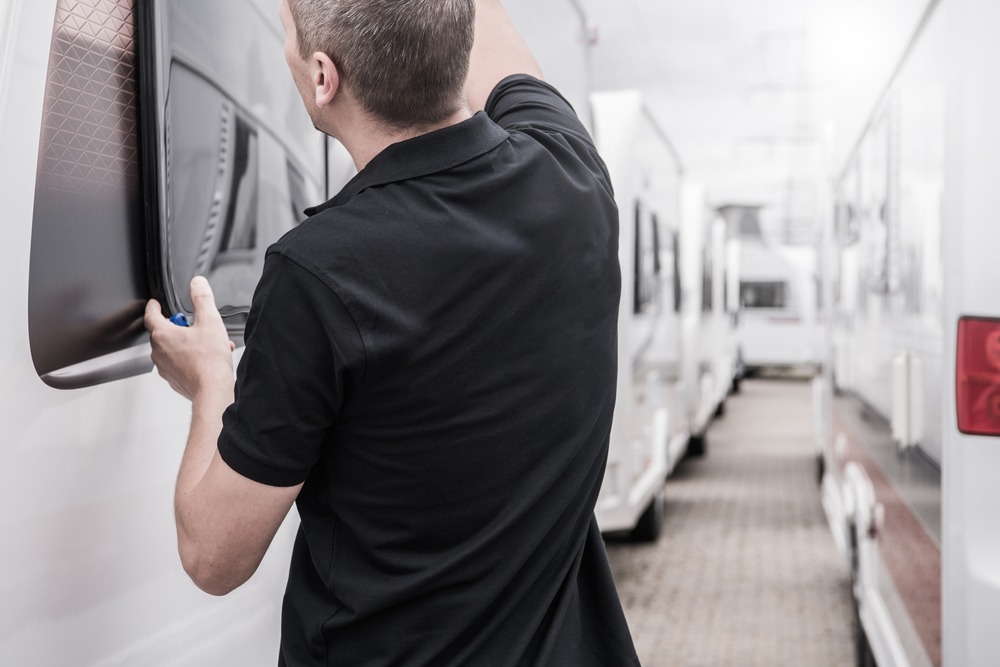
Your RV’s sealant is like the grout in a shower—it’s the stuff in between that does the heavy lifting of keeping water out. Over time, it dries out and cracks.
This is important for everyone. For those in storage, a small leak can go unnoticed for months, leading to devastating rot and mold. For year-round RV living, a drafty window or slide-out seal will have your furnace working overtime and burning through your propane. Grab a plastic putty knife and gently probe the sealant on your roof, around windows, and along compartment doors. If it’s brittle or pulling away, it’s time to replace it.
Power, Propane, and Appliances
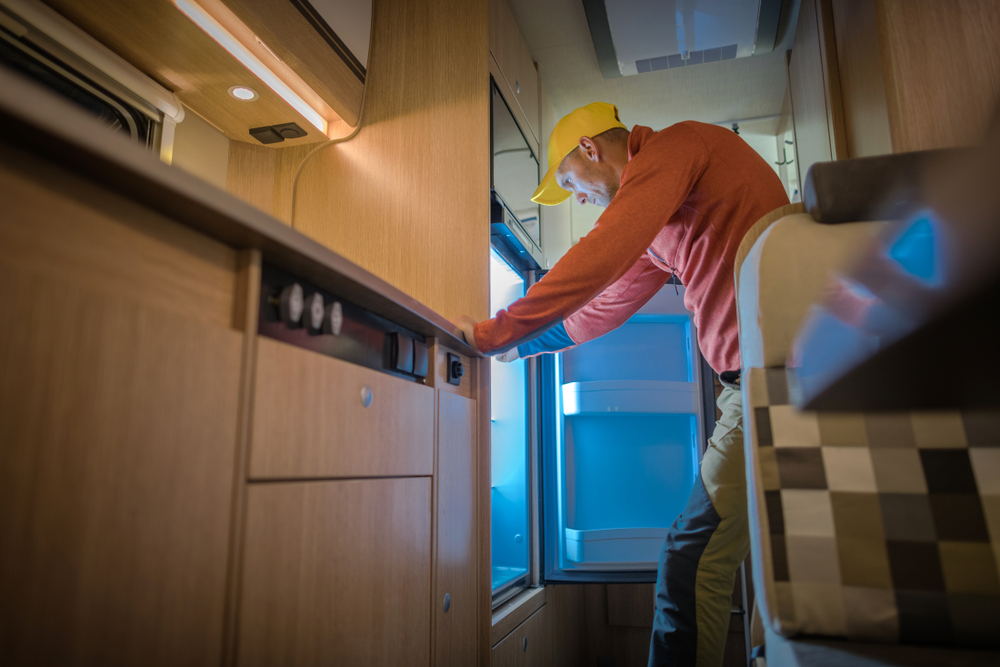
For the storer: Your RV’s battery will slowly die over the winter, even if everything is turned off. Things like your CO detector and radio memory create a tiny, constant “parasitic draw.” Either disconnect the negative battery cable entirely or invest in a smart battery tender to keep it healthy. Also, give your fridge a final clean-out and prop the doors open to prevent it from becoming a science project.
For the year-rounder: Before it gets truly cold, fire up your furnace. Let it run for a bit to burn off the dust that’s settled on the heating element (it might smell a little at first, that’s normal). It’s also a great time to check the exterior furnace vents for any insect nests or debris that could block airflow.
Need a Hand with Your RV Winterization in Mesa, AZ?
We know this is a lot of information, and getting these jobs done right takes time and a bit of confidence. If you’ve read through this and would rather have an expert handle it, we’re here to help. Our team at Arizona RV Service can perform a professional, thorough RV winterization or a full systems check to get you ready for the season. Give us a call, and we’ll make sure your rig is protected.